
Faster and still good
Lessons made quickly were judged no worse than lessons that took longer.
National pedagogical inspectors tested the lessons. The Inspectorate General of Education reported on the classrooms. Here is what they found, in their own numbers.

Before, seven in ten inspectors spent more than an hour preparing a single lesson. With NDX, they judged the lessons faster, useful and ready to teach.
Said preparing a lesson was faster than their usual practice. 89.6% said much faster.
Rated the lessons useful or very useful: 100% in French, 93.3% in English.
Needed no edits or only minor ones. 32.5% needed none at all.
Firm intent to keep using it. Not one said no.
Of lessons were generated in less than five minutes.
Spent more than an hour preparing one lesson before.
The inspectors' own analysis, across both language systems and every pathway.
Lessons made quickly were judged no worse than lessons that took longer.
What lowered usefulness was rework, so the work goes into lessons that need less of it.
Anglophone and Francophone, general, technical and teacher training, in more than 25 subjects.
Inspectors came to see it as instructional infrastructure for the country, not a classroom gadget.
“I was excited having all lessons generated and tracked in a click.”
“The most useful was the homework and assessments.”
“The hook relating to Bamenda made the lesson inclusive.”
“The student-centred approach of the lesson and the hands-on exercises.”
From the Inspectorate General of Education's report on classroom digitisation.
In a year when the national DECC pass rate fell from 70.2% to 63.2%, equipped schools did better than their peers. The Inspectorate calls these first, encouraging indications, not proof of cause.
Change in DECC pass rate, in points, in the region where the fall was hardest.
Share of schools that raised their pass rate.
Share of schools that raised their pass rate.
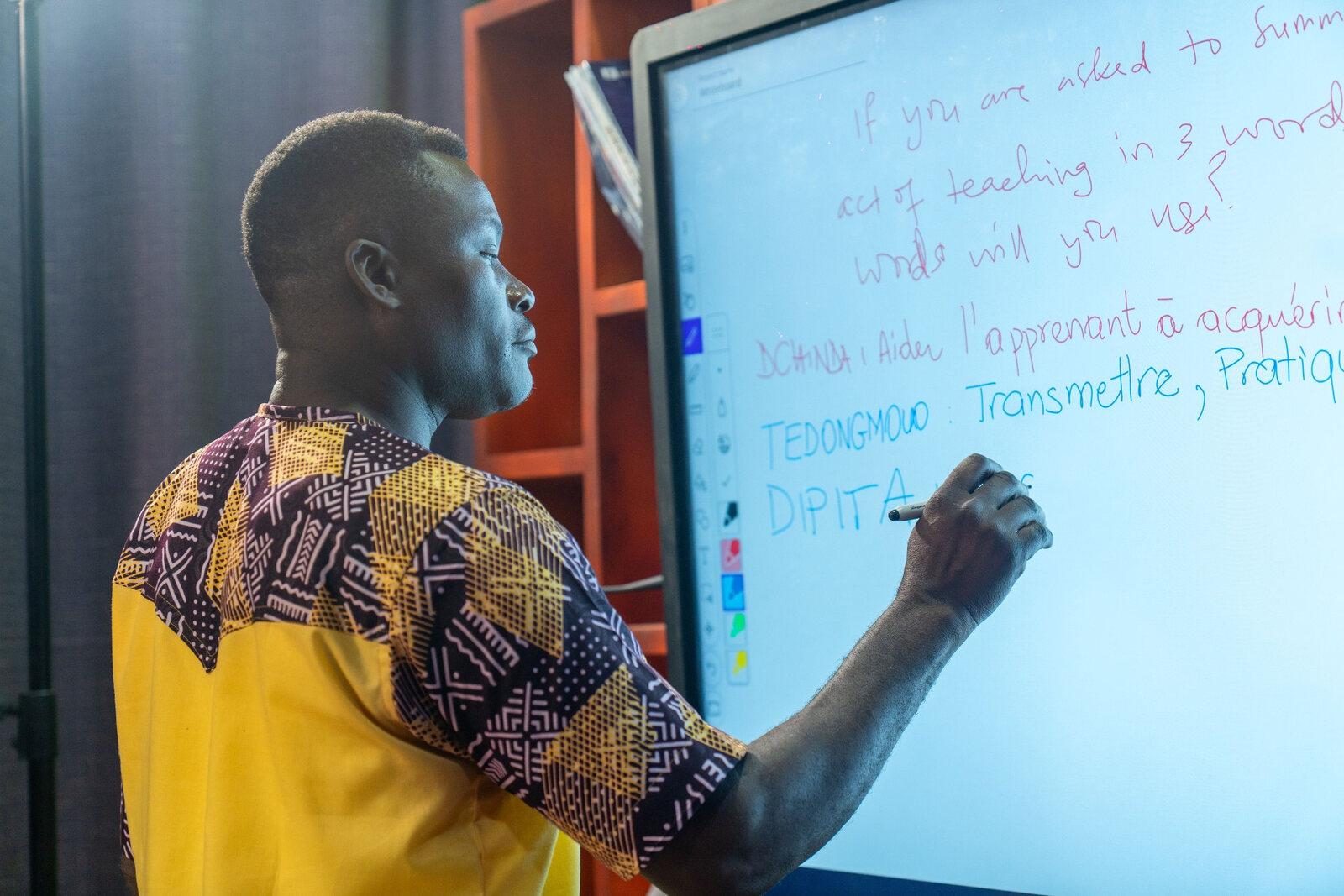
When the lesson is ready in minutes, the teacher’s time goes back to the pupils.
Only one school in six reported a technical problem. The barriers are the conditions around the classroom, which is what NDX is built for.
Solar power and battery storage keep the classroom running when the grid does not.
The classroom AI runs on the classroom's own hardware, online or offline.
Master trainers in every school, certification the ministry owns, and coaching after go-live.
Every request from the evaluation went on the plan. Most are already done.
We start with the conditions your schools actually have, and agree with you how the outcomes will be measured.